Introduction
Understanding the specific safety and operational benchmarks for lab environments is critical for any researcher or facility manager. When people ask, "What is the IEC standard for laboratory equipment?" they are usually referring to IEC 61010-1. This international standard dictates the safety requirements for electrical equipment used in laboratories, control rooms, and field operations. It ensures that any Multifunction IEC standard tester or diagnostic tool used within these spaces protects users from electric shock, mechanical hazards, and fire.
Compliance is not just a legal hurdle; it is a mark of quality. Without these standards, a High voltage IEC standard tester could pose significant risks to both personnel and delicate samples. This guide explores the depths of IEC 61010-1, explaining how it governs laboratory hardware and why choosing an Industrial IEC standard tester with the right certifications is vital for your facility's long-term success and safety.
The Core of Lab Safety: Exploring IEC 61010-1
The primary standard for lab equipment is IEC 61010-1. It covers a broad range of devices, from simple centrifuges to complex mass spectrometers. Its main goal is to prevent harm. It addresses four major risks: electric shock, mechanical hazards, spread of fire from the equipment, and liberated gases or explosion. When you use an Automated IEC standard tester, it must meet these criteria to ensure the automation process doesn't introduce new risks during unattended operation.
IEC 61010-1 is not a static document. It evolves to keep up with new technology. For example, as more labs move toward mobile diagnostics, the need for a Portable IEC standard tester has increased. These portable units must adhere to additional rigors regarding battery safety and casing durability. Manufacturers must subject their equipment to rigorous "Type Testing" to prove they meet these global safety expectations before they can be sold in major markets like the EU or North America.
Technical Requirements for an IEC Standard Tester
What makes a piece of equipment "IEC compliant"? It comes down to technical precision. The standard specifies insulation distances, grounding requirements, and component stress tests. For instance, a High precision IEC standard tester used in a lab must maintain specific "creepage" and "clearance" distances. These are the shortest paths between two conductive parts to prevent arcing.
Furthermore, the standard categorizes environments into "Measurement Categories" (CAT I, II, III, IV). Laboratory equipment usually falls under CAT II or CAT III. If you are operating a High voltage IEC standard tester, it must be rated correctly for the transient overvoltages it might encounter. Using a CAT II tool in a CAT III environment can lead to catastrophic failure. Reliability in these ratings is why top-tier labs only invest in Industrial IEC standard tester models that provide clear documentation of their testing parameters.
Key Technical Parameters for Compliance:
Dielectric Strength: Ensuring the insulation can handle voltage spikes without breaking down.
Protective Earthing: Low-impedance paths to ground to prevent the chassis from becoming "live."
Temperature Limits: Ensuring external surfaces don't burn the user during prolonged use.
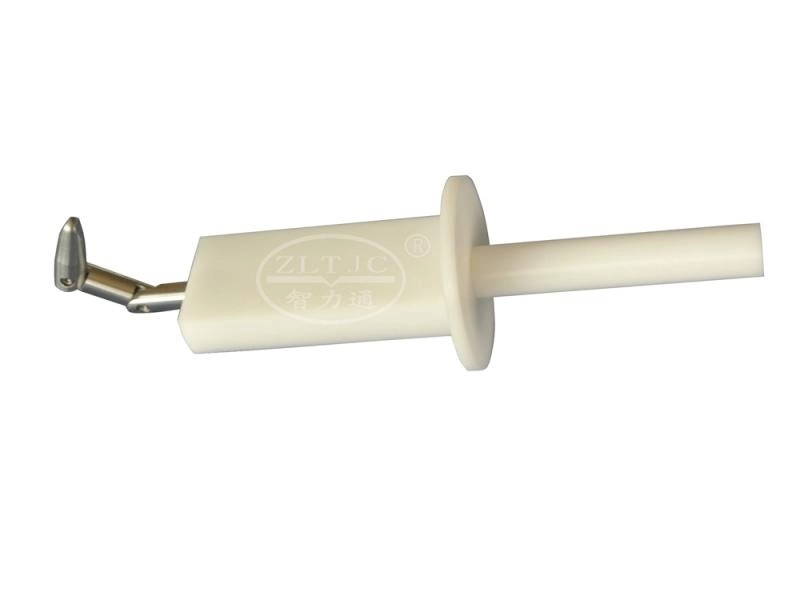
Specialized Testing: High Voltage and High Precision Needs
The Role of High Voltage in IEC Standards
High voltage testing is a specialized sub-sector of the IEC framework. Any High voltage IEC standard tester must be designed to contain energy during a breakdown. This involves specialized enclosures and interlocking systems. These systems prevent the user from touching live parts while the test is active. IEC 61010-2-030 is a specific "Part 2" standard that adds requirements for equipment with testing or measuring circuits. It ensures that even under "Single Fault Conditions," the device remains safe for the operator.
Achieving High Precision Under IEC Guidelines
Precision isn't just about the numbers on the screen; it's about stability. A High precision IEC standard tester must resist Electromagnetic Interference (EMI). IEC 61326-1 often goes hand-in-hand with safety standards to ensure that lab equipment doesn't give false readings due to nearby radio signals or power line noise. This synergy between safety (61010) and performance (61326) defines the modern standard for laboratory excellence.
Portability vs. Industrial Rigor in Lab Standards
In the past, lab equipment stayed on a bench. Today, we see a surge in field-based lab work. This has birthed the Portable IEC standard tester. The IEC requirements for portable gear include "Drop Tests" and "Impact Tests." If a technician drops a Portable IEC standard tester on a concrete floor, the internal high-voltage components must stay insulated. The casing cannot crack in a way that exposes dangerous parts.
Conversely, an Industrial IEC standard tester used in a permanent factory lab focuses on duty cycles and environmental resilience. These units often feature Automated protocols to run 24/7. The IEC standard for these devices emphasizes thermal management. They must dissipate heat effectively to prevent fire hazards during long-term, unattended testing cycles. Whether portable or fixed, the underlying philosophy remains the same: the machine must fail safely, even if a component breaks.
Automation and Multifunctionality: The New IEC Frontier
Modern labs demand efficiency. This has led to the rise of the Multifunction IEC standard tester. One device might now handle insulation resistance, ground bond testing, and leakage current analysis. Under IEC 61010, these multifunction devices must have clear switching logic. It should be impossible for a user to accidentally trigger a high-voltage mode while expecting a low-resistance measurement.
Automated IEC standard tester systems take this a step further. They use software to control the test sequence. IEC 61010-1 requires that software errors do not lead to physical hazards. If the computer crashes, the Automated system must default to a "Power Off" or "Safe" state. This ensures that even in complex industrial setups, the human element is protected by a robust hardware-software fail-safe mechanism.
| Feature | Portable Tester | Industrial/Fixed Tester |
| Primary IEC Focus | Impact Resistance & Battery Safety | Thermal Management & Duty Cycle |
| Typical Use | Field Diagnostics / On-site Repair | Production Lines / R&D Labs |
| Automation Level | Manual or Semi-Automated | Fully Automated Integration |
| Typical Rating | Often CAT III 600V | Can reach High voltage CAT IV |
How to Verify IEC Compliance in Your Lab
You shouldn't take a manufacturer's word for it. Verification is a critical step in the procurement of an IEC standard tester. Genuine compliance is usually backed by a report from a "Nationally Recognized Testing Laboratory" (NRTL) like UL, TUV, or Intertek. These labs put the High precision IEC standard tester through its paces in a controlled environment.
When reviewing a datasheet for a Multifunction IEC standard tester, look for the specific version of the standard (e.g., IEC 61010-1:2010 + A1:2016). Older versions may not cover the latest safety requirements for modern electronics. Also, check the "Declaration of Conformity." This document lists all the IEC standards the product meets. If a company cannot provide this, the device might not be an Industrial IEC standard tester, but rather a lower-grade consumer product masquerading as professional gear.
Comparative Analysis: IEC vs. Other Regional Standards
While IEC is global, you might encounter regional variations like UL (USA) or CSA (Canada). Fortunately, most of these regional standards are "harmonized" with the IEC. This means a High precision IEC standard tester sold in Germany usually meets the core requirements for the US market as well. However, minor differences exist, such as different plug requirements or specific labeling for fire hazards.
Choosing an IEC standard tester over a locally-certified-only device is a smart "future-proofing" move. It ensures that if your lab expands internationally, your equipment and training protocols remain valid. It also simplifies the sourcing of parts. Because the Industrial IEC standard tester follows global footprints, finding compatible probes, leads, and software updates is much easier than with proprietary, non-standardized equipment.
The Future of Laboratory Equipment Standards
As we look toward the future, the IEC is integrating more requirements for "Connected" equipment. The "Internet of Things" (IoT) is entering the lab. An Automated IEC standard tester that uploads results to the cloud now faces cybersecurity requirements. While IEC 61010 focuses on physical safety, new amendments are looking at how data integrity affects safety. For example, if a cloud-based High voltage IEC standard tester is hacked, could a remote user trigger a dangerous discharge?
We expect future versions of the standard to mandate stricter digital handshakes and encrypted control signals for any Multifunction lab device. Staying ahead of these changes means choosing a manufacturer that is active in the IEC committees and regularly updates their Portable and Industrial product lines.
Conclusion
The IEC standard for laboratory equipment—specifically IEC 61010-1—is the backbone of global scientific safety. It transforms a potentially dangerous High voltage IEC standard tester into a reliable, predictable tool for discovery. By adhering to these strict guidelines regarding insulation, grounding, and mechanical stability, manufacturers provide the "Safety First" environment required for modern research.
When you purchase your next Multifunction IEC standard tester, remember that compliance is an investment in your team's safety and your data's accuracy. Whether you need a Portable unit for quick checks or a High precision system for complex R&D, always prioritize IEC-certified Industrial grade equipment.
FAQ
Q1: Is IEC 61010 mandatory?
While standards themselves are often voluntary, most governments mandate compliance through local laws (like the CE mark in Europe). Using a non-compliant IEC standard tester can lead to legal liability if an accident occurs.
Q2: What is the difference between IEC 61010 and ISO 17025?
IEC 61010 refers to the safety of the hardware itself. ISO 17025 refers to the competence of the laboratory and the accuracy of its testing processes. You need an Industrial IEC standard tester to safely perform the tests required for ISO 17025 accreditation.
Q3: Can a Portable IEC standard tester be as accurate as a benchtop model?
Yes. Modern electronics allow a Portable device to achieve High precision results. The IEC standard ensures that this portability doesn't come at the cost of safety or shielding.
Q4: How often should an Automated IEC standard tester be recalibrated?
IEC 61010 doesn't dictate calibration intervals, but ISO standards usually suggest annually. Calibration ensures your High precision device continues to operate within its safety and accuracy parameters.
Our Manufacturing Strength and Global Reach
As a premier manufacturer in the electrical testing industry, we operate a massive 50,000-square-meter modern factory dedicated to the production of high-end diagnostic equipment. We specialize in providing B2B solutions, offering everything from a Portable IEC standard tester for field technicians to complex, Automated testing benches for large-scale industrial plants. Our engineering team focuses on High precision and High voltage applications, ensuring that every product leaving our line exceeds IEC safety requirements. We don't just sell tools; we provide integrated solutions for power utilities, research institutes, and manufacturing facilities worldwide. With our robust R&D capabilities and stringent quality control, we are your trusted partner for any Industrial IEC standard tester needs, helping you maintain a safe and compliant laboratory environment.


