IPX1 to IPX6 Water Test Equipment: How to Build the Right IP Test Setup
Water ingress protection has become a fundamental requirement across industries such as electronics, automotive systems, lighting, and industrial enclosures. Products exposed to moisture, splashing, or high-pressure water must meet clearly defined protection standards before entering global markets. This requirement has driven the rapid adoption of IP water test equipment designed to simulate real-world environmental conditions with precision and repeatability.
From basic dripping simulations to high-pressure jet testing, IPX1 to IPX6 levels represent a critical range of water exposure scenarios defined by international standards. Building an effective test setup is not limited to purchasing a single device; it involves selecting the right combination of equipment, aligning with compliance standards, and ensuring long-term reliability through calibration and process control.
Key Takeaways
● IPX1 to IPX6 water test equipment covers dripping, spraying, and jetting water exposure scenarios
● A complete IP test setup requires multiple devices configured according to IEC 60529
● IP water test equipment must match product size, application, and target certification markets
● Automation improves repeatability and reduces human error in IP testing processes
● Calibration and documentation are essential for maintaining compliance and traceability
IP Testing Equipment Compliance Overview
Definition and Purpose
Ingress Protection (IP) testing defines how effectively a product resists the penetration of solids and liquids. Within this framework, IP water test equipment is used specifically to evaluate resistance against water exposure under controlled laboratory conditions. Each IPX level corresponds to a standardized method that replicates different environmental scenarios.
The purpose of this testing is to verify that enclosures prevent water from entering critical components that could compromise safety or functionality. In many industries, failing to meet IP requirements can lead to product recalls, safety risks, or certification rejection. Therefore, IP testing is not only a quality control step but also a regulatory necessity.
Testing procedures are designed to simulate realistic exposure conditions such as dripping rain, splashing water, or pressurized jets. These simulations must be consistent and repeatable, which is why specialized IP water test equipment is required instead of manual testing approaches.
Importance for Water Ingress Protection
Water ingress protection is directly linked to product durability and operational safety. Devices used outdoors, in humid environments, or in industrial settings are constantly exposed to moisture, making IP compliance a baseline requirement rather than an optional feature.
In sectors such as electric vehicles and LED lighting, exposure to water can cause electrical failures or corrosion over time. Proper use of IP water test equipment ensures that such risks are identified early in the development phase, reducing long-term maintenance costs and warranty claims.
Global trade also plays a role in emphasizing IP compliance. Products intended for international markets must meet IEC standards, and consistent testing with certified IP water test equipment ensures that products meet expectations across regions without the need for redesign.
Water Ingress Protection Test Equipment Standards
IEC 60529 and Global Standards
IEC 60529 is the primary international standard governing IP testing procedures. It defines the methodology, equipment requirements, and acceptance criteria for both solid and liquid ingress protection. Most IP water test equipment is designed specifically to comply with this standard, ensuring global applicability.
The standard outlines precise conditions such as water flow rates, pressure levels, nozzle diameters, and exposure durations. These parameters must be strictly controlled to ensure test validity. As a result, modern IP water test equipment integrates flow control systems, pressure regulation, and calibrated measurement tools.
In addition to IEC standards, regional adaptations such as EN and GB standards align closely with IEC 60529, allowing manufacturers to use the same IP water test equipment across multiple certification pathways.
IPX1–IPX6 Test Types
The range from IPX1 to IPX6 represents progressively more demanding water exposure conditions. Each level requires a specific type of IP water test equipment to accurately simulate the defined scenario.
IP Level | Test Method | Equipment Type | Water Exposure |
IPX1 | Vertical drip | Drip box | Light dripping water |
IPX2 | Tilted drip | Adjustable drip system | Dripping at 15° angle |
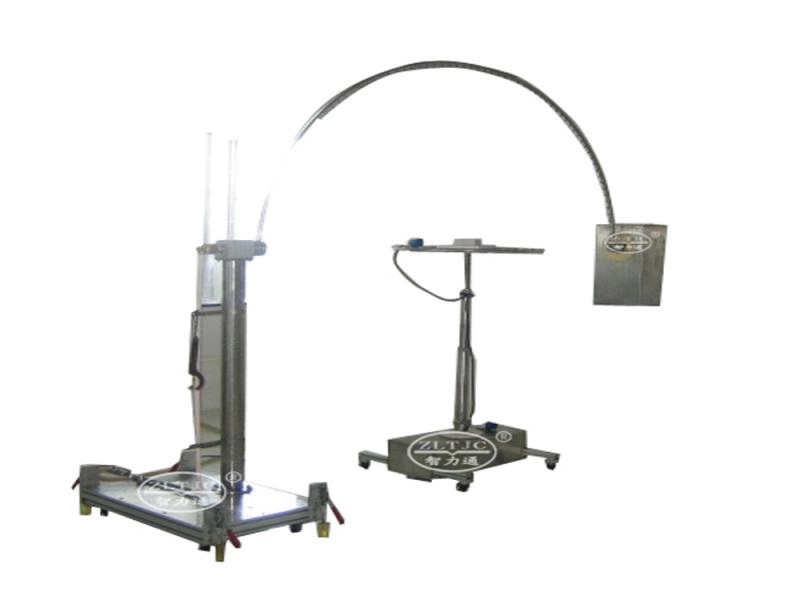
IPX3 | Spray | Oscillating tube | Spraying water |
IPX4 | Splash | Oscillating tube | Multi-directional splash |
IPX5 | Water jet | Nozzle system | Low-pressure jets |
IPX6 | Strong jet | High-pressure nozzle | Powerful water jets |
Each test method requires precise control over water distribution and exposure time. For example, oscillating tubes used in IPX3 and IPX4 tests must rotate at defined speeds to ensure uniform coverage. Similarly, IPX5 and IPX6 tests rely on calibrated nozzles to maintain consistent jet pressure.
The selection of IP water test equipment must therefore align with the specific IP levels required by the product. Attempting to use a single device for multiple test levels without proper configuration can compromise test accuracy.
How to Build the Right IP Test Setup
Step 1: Define Required IP Rating
The first step in building an effective test setup is determining the target IP rating. This decision depends on the product’s intended use environment, such as indoor electronics, outdoor lighting, or industrial machinery. Each application requires a different level of protection against water exposure.
Market requirements also influence this decision. Products intended for European markets typically follow IEC standards, while other regions may impose additional requirements. Selecting the correct IP rating ensures that the chosen IP water test equipment aligns with certification expectations.
A clear definition of the required IP level prevents unnecessary investment in equipment that exceeds or falls short of testing needs. It also simplifies the design of the overall testing system.
Step 2: Select Required Equipment
Once the IP rating is defined, the next step involves selecting the appropriate IP water test equipment. A complete setup often includes multiple devices rather than a single machine, as each IP level requires a specific testing method.
For IPX1 and IPX2 testing, drip boxes with adjustable flow rates are typically used. IPX3 and IPX4 testing require oscillating tube systems capable of delivering controlled spray patterns. For IPX5 and IPX6, nozzle-based systems with pressure regulation are necessary to simulate water jets.
Equipment Type | Supported IP Levels | Key Features |
Drip box | IPX1–IPX2 | Controlled dripping rate |
Oscillating tube | IPX3–IPX4 | Adjustable spray angles |
Jet nozzle system | IPX5–IPX6 | Pressure and flow control |
The combination of these systems forms a complete IP water test equipment setup capable of covering multiple testing scenarios.
Step 3: Consider Automation Level
Automation plays an increasingly important role in modern IP testing environments. Automated IP water test equipment reduces variability caused by manual operation and ensures consistent test conditions across multiple cycles.
Advanced systems include programmable controllers that regulate water flow, pressure, and test duration. These features allow laboratories to standardize testing procedures and reduce operator dependency. In high-volume testing environments, automation significantly improves efficiency and repeatability.
Manual systems may still be used for smaller laboratories, but they require careful operation to maintain accuracy. In contrast, automated IP water test equipment provides built-in safeguards that ensure compliance with testing standards.
Step 4: Lab Space and Infrastructure
The physical setup of the testing environment is another critical factor. IP testing involves significant water usage, which requires proper drainage systems and water recycling solutions. Without adequate infrastructure, testing operations can become inefficient or unsafe.
Space requirements depend on the size of the products being tested. Large enclosures may require dedicated testing chambers, while smaller devices can be tested using compact IP water test equipment setups. Proper layout planning ensures smooth workflow and prevents cross-contamination between test stages.
Environmental control is also important, as temperature and humidity can influence test results. Maintaining consistent conditions ensures that IP water test equipment delivers reliable and repeatable outcomes.
Modern Compliance Methods
Automation and Accuracy
Modern compliance methods emphasize precision and repeatability. Automated IP water test equipment integrates sensors and control systems that maintain consistent test parameters, reducing the risk of human error.
Accurate flow measurement and pressure control are essential for replicating real-world conditions. Even minor deviations can affect test results, making high-quality equipment a necessity. Advanced systems provide real-time monitoring to ensure that all parameters remain within specified limits.
The integration of digital controls allows operators to store test profiles and reuse them for future testing. This capability enhances efficiency and ensures consistency across multiple test cycles.
Reporting and Traceability
Traceability is a key requirement in compliance testing. Modern IP water test equipment includes data logging features that record test parameters and results. These records are essential for audits, certification processes, and quality assurance.
Detailed reports provide evidence that testing procedures were conducted according to standards. This documentation is particularly important for products entering regulated markets, where compliance verification is mandatory.
Digital reporting systems also enable easier data management and analysis. By maintaining comprehensive records, laboratories can identify trends, optimize testing procedures, and ensure continuous improvement.
Reliable Testing Practices
Calibration and Maintenance
Regular calibration is essential to maintain the accuracy of IP water test equipment. Over time, components such as flow meters and pressure regulators may drift from their original settings, affecting test reliability.
Calibration should be performed according to recognized standards such as ISO 17025. This ensures that all measurements are traceable to international references. Routine maintenance also helps prevent equipment failures and extends the lifespan of testing systems.
Neglecting calibration can lead to inaccurate test results, which may result in certification failures or product recalls. Consistent maintenance practices are therefore critical for ensuring long-term reliability.
Choosing Water Ingress Protection Test Equipment
Selecting the right IP water test equipment requires careful evaluation of several factors, including product size, required IP levels, and testing frequency. Equipment must be capable of handling the specific conditions defined by the target IP rating.
Flexibility is another important consideration. Modular systems that support multiple IP levels provide greater adaptability and reduce the need for additional equipment. This approach is particularly useful for laboratories testing a wide range of products.
Quality and compliance should also be prioritized. Equipment designed to meet IEC standards ensures that testing procedures align with global requirements, reducing the risk of certification issues.
Conclusion
Building the right IP test setup requires a systematic approach that combines standard compliance, equipment selection, and operational reliability. From defining the required IP rating to selecting appropriate IP water test equipment, each step plays a critical role in ensuring accurate and repeatable testing results.
Modern testing environments benefit from automation, data traceability, and well-maintained equipment, all of which contribute to consistent compliance with international standards. A properly designed system not only supports certification requirements but also enhances product reliability and long-term performance.
For laboratories and manufacturers seeking a comprehensive solution, ZHILITONG provides a full range of IP water test equipment designed to meet IEC 60529 requirements while supporting flexible and scalable test setups.
FAQ
What does an IP rating mean for my product?
An IP rating defines the level of protection a product provides against solid objects and water. The second digit specifically indicates resistance to water ingress, which is tested using specialized IP water test equipment.
How often should I calibrate my IP testing equipment?
Calibration frequency depends on usage, but it is generally recommended to perform calibration at least once a year. High-frequency testing environments may require more frequent calibration to maintain accuracy.
Can I use manual testing for water ingress protection?
Manual testing is possible but requires strict control of test parameters. Automated IP water test equipment provides greater consistency and reduces the risk of human error.
What is the difference between IPX7 and IPX8?
IPX7 involves temporary immersion in water under defined conditions, while IPX8 covers continuous immersion under more demanding conditions. These tests require different types of equipment beyond IPX6 systems.
Why do I need to keep test records?
Test records provide proof of compliance with standards and are essential for audits and certification processes. Modern IP water test equipment includes data logging features to support traceability.


