Introduction
Why do some cables fail after thousands of bends? For cables and flexible cords, the answer usually involves a specialized fatigue testing apparatus, not a general-purpose machine. In this article, you will learn which fatigue tester suits different cable test tasks, how to identify the right setup, and what to check before choosing equipment for electrical product validation.
Which fatigue testing apparatus is used for different cable fatigue test tasks?
Choosing the right fatigue testing apparatus for cables starts with a practical question: what exactly is being stressed during the test? In cable evaluation, the answer is rarely just “the cable.” Some tests focus on the conductor’s ability to survive repeated bending, while others examine how a finished cord performs when flexed near the plug, connector, or cable entry point. That difference matters because the movement pattern, fixture design, and failure mode are not the same. A correct machine choice begins with the real test target, not with a broad assumption about fatigue testing in general.
Test target | Typical apparatus | Main movement applied | Primary evaluation focus |
Conductor or cable section | Bending fatigue equipment | Repeated bending of a defined section | Resistance to bending-related fatigue damage |
Flexible cord in assembled product | Flexing cycle tester | Oscillating or swivelling motion during repeated cycles | Durability of the cord entry and moving cable section |
Finished plug-connected cord set | Cord flexing fatigue tester | Continuous cyclic flexing under controlled angle and speed | Mechanical and electrical survival during service-like movement |
Bending fatigue equipment for conductor and cable bending resistance
Bending fatigue equipment is used when the purpose of the test is to evaluate how a conductor or cable section behaves under repeated bending stress. In this type of setup, the specimen is not treated as a complete end-use assembly. Instead, the focus is placed on the cable body or conductor section itself, where cyclic mechanical stress may eventually cause cracking, conductor breakage, or loss of performance. This makes the equipment especially relevant when the test objective is material-level durability under repeated motion rather than end-product handling.
Flexing cycle testers for finished cords and plug-connected assemblies
A fatigue tester in the form of a flexing cycle apparatus is more suitable when the sample is a finished flexible cord or a plug-connected cable assembly. Here, the test is designed to reproduce repeated movement near the point where the cord enters the plug, appliance, or other fixed component. The main concern is not just whether the cable can bend, but whether the complete assembly can tolerate long-term flexing without mechanical failure or conductor interruption. This makes flexing cycle testers better aligned with product-level durability verification for cords that move during normal use.
Why the machine type changes with the test target
The machine category changes because the stressed zone changes. When the goal is to examine the conductor or cable section, a bending fatigue apparatus is the correct category. When the goal is to test a finished cord assembly under repeated service-like motion, a flexing cycle tester is the more appropriate choice. The decision should therefore begin with the physical test target, not with a broad search for a general fatigue machine.
How do you identify the right fatigue tester before comparing models?
Before comparing capacities, layouts, or automation levels, it is more useful to identify the test logic behind the application. In cable durability work, buyers often begin by looking at machine style or price range too early, which can lead to the wrong shortlist. A fatigue tester is only appropriate when its motion and monitoring method match the specimen and the expected failure mode.
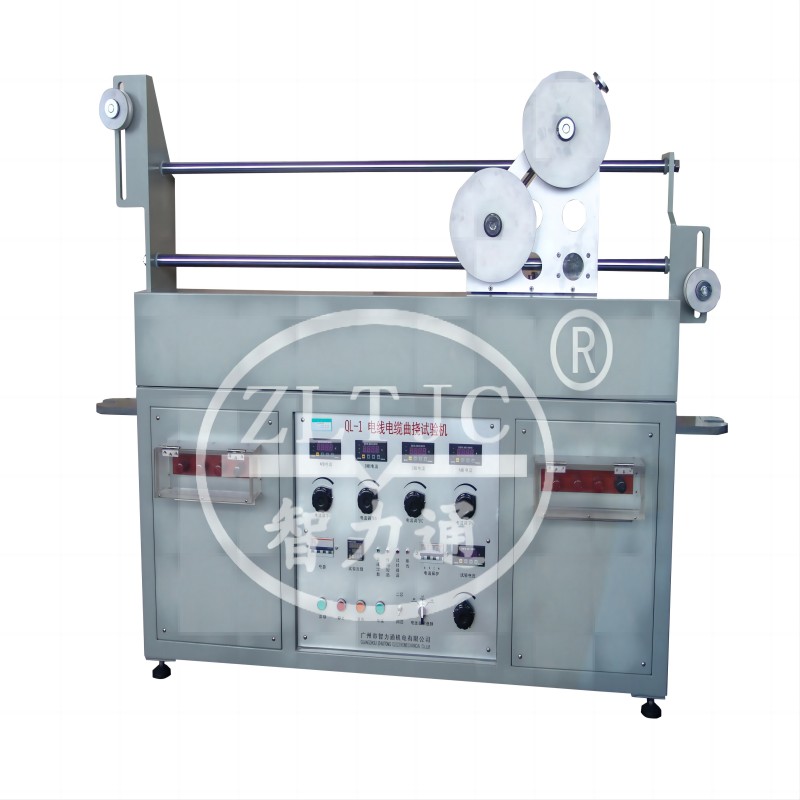
Define the specimen clearly
The first step is to define the specimen in physical terms, not just by product name. A bare conductor, an insulated cable, a flexible cord, and a finished assembly may all be described casually as “cable samples,” but they do not behave in the same way during cyclic testing. A bare or simple cable specimen is usually evaluated for how the conductor and surrounding structure respond to repeated localized bending. A finished assembly, by contrast, includes termination points, plugs, entries, or fixed interfaces that shift the test focus toward the durability of the moving connection zone rather than the cable body alone.
This distinction matters because specimen form determines the appropriate testing category before any model comparison begins. If the test article is only a cable section, the correct fatigue testing apparatus will normally be one designed to stress that section directly. If the article is a flexible cord used as part of a finished product, the machine must represent repeated service movement at the assembly level.
Define the movement the test must reproduce
Once the specimen is clear, the next question is the motion pattern that must be reproduced. In cable fatigue work, the essential movements usually fall into three broad categories: bending, oscillation, and flexing. These terms are often used loosely in product discussions, but they imply different test actions. Bending typically focuses stress on a defined cable section. Oscillation suggests repeated angular movement around a point or path. Flexing is commonly associated with repeated service-like motion in a cord that moves during use.
A good way to frame this step is to ask: What movement causes fatigue in the real application? If the answer is repeated bending of the conductor path, the tester must reproduce that. If the answer is repeated movement near an entry point, the motion must reflect that service condition instead. At this stage, the goal is not to compare mechanisms or controls, but to identify the fatigue movement that the test must faithfully repeat.
Define the failure result you need to observe
The third step is to define the pass or fail outcome before looking at equipment options. Cable fatigue tests do not all fail in the same way, so the right tester depends on what kind of result matters. In some cases, the main concern is visible or mechanical breakage after repeated motion. In others, the decisive outcome is conductor interruption, loss of continuity, or survival to a required number of cycles without failure.
Selection question | What you define first | Why it matters for tester choice |
What is the specimen? | Bare conductor, insulated cable, flexible cord, or finished assembly | Determines the correct testing category |
What motion causes fatigue? | Bending, oscillation, or flexing | Determines what movement the tester must reproduce |
What counts as failure? | Breakage, interruption, or survival to cycle target | Determines how the test result must be judged |
Why test purpose should come before equipment comparison
The final filter is the purpose of the test itself. Some tests are meant to study basic bending durability, while others are intended to verify product-level cord movement performance under repeated use. These are not the same task, even if both are described as fatigue testing. That is why equipment comparison should come only after the test purpose is fixed. Starting with machine size, price, or general configuration can blur the distinction between different test objectives and create a shortlist of models that are technically impressive but mismatched to the real application.
How do standards affect the choice of fatigue testing apparatus?
In cable fatigue testing, the machine is often selected less by preference than by compliance. That is because many tests in this field are defined by formal methods that specify how the sample must move, how it must be mounted, and what outcome counts as failure. In other words, the applicable standard does not simply provide a reporting framework after the test is finished; it frequently determines the structure of the test itself.
When the required standard determines the machine directly
For many cable applications, the correct fatigue testing apparatus is effectively chosen by the standard before the buyer even begins comparing suppliers. If the method calls for repeated bending of a cable section, then the machine must reproduce that exact motion pattern. If the method defines cyclic flexing of a finished cord assembly, then the apparatus must support that form of testing instead. This means the standard acts as a selection driver, not just a checklist. The buyer is not starting from a blank page; the required test method already narrows the acceptable machine category.
Why compliance-focused buyers should start from the test method
Buyers involved in certification, internal quality control, or pre-compliance validation should begin with the required method, not with product brochures. In certification work, the goal is to prove that the test was carried out in a form recognized by the relevant requirement. In quality control, the aim is usually to verify production consistency against the same established procedure. In pre-compliance testing, the lab may still be in development mode, but the equipment must already reflect the intended formal method closely enough to make the results meaningful.
Buyer situation | Why the test method comes first | Selection implication |
Certification | The method must align with formal compliance expectations | Only apparatus matching the required procedure should be considered |
Quality control | Routine checks need consistency against a fixed test approach | The tester must support repeatable use of the same defined method |
Pre-compliance | Early screening still needs correlation with future formal testing | The apparatus should mirror the intended standard-based setup |
How to avoid choosing a fatigue tester that does not fit the standard
The most common mistake is assuming that any cable fatigue tester with similar motion is “close enough.” In practice, a mismatch between apparatus capability and the required standard can make the test unsuitable for compliance use, even if the machine appears technically capable. A tester may have the right general purpose but still fail to align with the prescribed specimen setup, movement pattern, or evaluation logic.
To avoid that problem, buyers should verify compatibility at the method level. The question is not whether the machine can perform bending or flexing in a broad sense, but whether it matches the exact test form required for the intended application. This standard-first review should happen before capacity, automation, or layout enter the discussion, because once the method fit is wrong, the rest of the specification becomes irrelevant.
What machine features matter most after you know the correct test type?
Once the correct test category has been identified, the next step is to compare machine features that directly affect test consistency, daily usability, and the quality of recorded results. At this stage, the goal is no longer to decide what kind of fatigue testing apparatus is needed, but to determine which configuration can run the selected test reliably over repeated cycles.
Motion stability and cycle control
For any fatigue tester, motion stability is one of the most important indicators of result reliability. A machine that cannot maintain repeatable movement over long test durations will introduce uncertainty into the test, even if the overall setup appears correct. In cable fatigue work, this means the movement should remain consistent from cycle to cycle, the running speed should stay controlled rather than drifting over time, and the cycle count should reflect the actual number of completed motions. These points are critical because fatigue evaluation depends on repetition. If the movement changes during the test, the stress history seen by the sample also changes, which weakens the value of the final result.
Sample holding and monitoring functions
Practical specimen handling is just as important as motion control because poor clamping or unstable sample positioning can distort the test condition before failure ever occurs. A well-designed machine should hold the specimen securely, position it consistently, and allow the operator to load or replace samples without unnecessary complexity. These are not minor convenience details; they directly affect whether the applied motion is transmitted to the intended test zone in a repeatable way.
Monitoring functions also deserve close attention. In fatigue testing, the machine should do more than move the sample repeatedly. It should also help the operator capture what happens during the run, whether that means detecting interruption, identifying breakage, or stopping the test at the right point.
Feature area | What to look for | Why it matters |
Motion control | Stable movement, controlled speed, accurate cycle counting | Supports consistent fatigue loading and reliable results |
Sample handling | Secure clamping and repeatable specimen positioning | Helps ensure the correct test zone is stressed each time |
Monitoring | Fault detection and clear stop logic | Improves result capture and reduces operator uncertainty |
Workflow efficiency | Easy loading, practical operation, and suitable sample capacity | Supports routine lab use and higher daily productivity |
Throughput and day-to-day operating efficiency
After accuracy and monitoring are confirmed, operating efficiency becomes the next meaningful comparison point. Some labs only need to evaluate one sample at a time, while others benefit from multi-sample testing to support routine quality work or higher-volume validation. In those environments, throughput influences the practical value of the machine just as much as its technical design. A tester that is difficult to load, slow to reset, or inconvenient to monitor may be acceptable for occasional use, but it becomes inefficient in daily operation.
Operator convenience also matters because fatigue tests often run for long periods and may be repeated frequently. Machines that simplify setup, reduce manual intervention, and make test status easy to follow are usually better suited to routine laboratory use.
Conclusion
The right machine for cable fatigue tests is a fatigue testing apparatus matched to the specimen, motion, and test method. The best choice starts with the task, then the standard, and finally the features. Guangzhou Zhilitong Electromechanical Co., Ltd. provides practical fatigue tester solutions with reliable cycle control, stable testing, and helpful support, making cable validation more accurate and efficient.
FAQ
Q: What fatigue testing apparatus is used for cable fatigue tests?
A: A fatigue testing apparatus for cables usually performs repeated bending or flexing on conductors, cords, or assemblies.
Q: How do I choose the right fatigue tester for my sample?
A: Select a fatigue tester based on specimen type, required movement, and the defined failure criterion.
Q: Can one fatigue testing apparatus handle all fatigue tests?
A: No. A fatigue testing apparatus must match the specific test task, such as cable bending or cord flexing.
Q: Why does the test standard matter when selecting equipment?
A: The fatigue testing apparatus must follow the required method, because standards define motion, setup, and evaluation.


