Product Overview
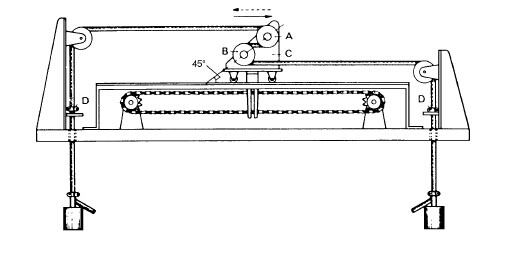
Developed by ZLTJC, the IEC 60245.2 Rubber Cables Flexing Test Apparatus (Model: ZLT-QL1A) is a professional testing device designed to assess the mechanical durability of flexible rubber cords and cables through repeated back-and-forth bending operations. This apparatus adheres to a series of international standards, ensuring its test results are authoritative and recognized globally for compliance purposes.
Notably, the device has specific applicability limits: it does not test flexible cables with cores having a nominal cross-sectional area greater than 4mm², nor those with more than 18 cores laid up in over two concentric layers—aligning with the requirements of IEC 60245-2/1998-04. Unlike its counterpart (ZLT-QL1), the ZLT-QL1A features a specialized three-pulley flexing test design, optimized with a modified Carrier C to meet stricter testing scenarios. Its integrated electrical control system monitors key parameters in real time, automatically stopping tests in case of abnormalities, making it a reliable tool for quality assurance in cable manufacturing, R&D, and third-party testing.
Technical Parameters
Parameter Category | Details |
Model | ZLT-QL1A |
Brand | ZLTJC |
Applicable Test Standards | IEC 60245-2/1998-04 (Figure 6, Clause 3.5, Table 3), IEC 60227-2/1997-11 (Figure 1), IEC 60065/1998-07 (Table 11), EN 50396 (Clause 6.2-6.3, Figures 4-5) |
Inapplicable Cable Conditions | 1. Cores with nominal cross-sectional area > 4mm²; 2. Cables with > 18 cores in over two concentric layers |
Carrier Speed | - Standard: 0.33 m/s±5% (driven by geared motor); - Three-pulley test: Adjustable 0.1~0.33 m/s |
Pulley Sizes | - Standard set: 60mm, 80mm, 120mm, 160mm, 200mm; - Three-pulley specific set: 40mm, 45mm, 50mm |
Weight Range | 0.5 kg to 8 kg (full set for load application) |
Electrical Control Specifications | - Load current: 0~25A; - Load voltage: 0~400V; - Protection triggers: Current interruption, wire-to-wire short circuit, cable-pulley short circuit |
Power Supply | Standard: 380V 50Hz; Customizable voltage/frequency available on request |
Product Features
Compliance with Global Industry Standards
The ZLT-QL1A is engineered to meet multiple internationally recognized standards, including IEC 60245-2, IEC 60227-2, IEC 60065, and EN 50396. This compliance ensures that test results are accepted across global markets, helping manufacturers and testing labs validate cable performance against regional and international regulatory requirements—critical for products intended for export.
Specialized Three-Pulley Flexing Test Design
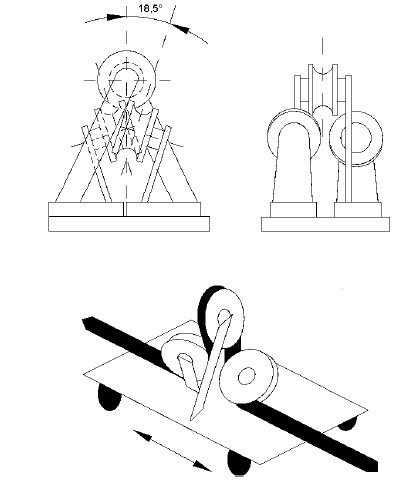
Distinguishing itself from basic flexing testers (e.g., ZLT-QL1), the ZLT-QL1A adopts a three-pulley configuration tailored to IEC 60245-2 Figure 6 and EN 50396 Clause 6.3. The modified Carrier C enhances test precision by simulating real-world bending stress on cables, making it ideal for evaluating the durability of high-performance flexible rubber cables used in demanding applications (e.g., industrial machinery, portable electronics).
Precise and Adjustable Speed Control
To minimize test variability, the apparatus uses a geared motor with a chain-and-connecting-rod drive system. It maintains a standard speed of 0.33 m/s±5% for general tests, while offering an adjustable range of 0.1~0.33 m/s for three-pulley scenarios. This speed stability ensures consistent bending cycles, a key factor in generating reproducible mechanical durability data.
Comprehensive Standard Outfit for Versatile Testing
The ZLT-QL1A comes fully equipped to handle diverse testing needs, including:
A carrier with recirculating-ball bearing bushes for smooth, stable movement;
Bolt/nut sets, restraining clamps, and sample fasteners for secure cable positioning;
Instrument terminals (or optional plugs/sockets) for electrical connection;
Two pulley sets (standard and three-pulley specific) and a 0.5 kg to 8 kg weight set to simulate different load conditions.
This all-in-one setup eliminates the need for additional accessories, reducing setup time and operational complexity.
Intelligent Electrical Protection Mechanism
The integrated electrical control unit prioritizes safety and data integrity. It monitors 0~25A load current and 0~400V load voltage in real time, and automatically stops testing if it detects current interruption, wire-to-wire short circuits, or short circuits between the cable sample and pulleys. This feature protects both the apparatus from damage and the operator from hazards, while ensuring only valid test data is recorded.
Application
Wire & Cable Manufacturing Industry
For cable manufacturers, the ZLT-QL1A serves as a critical quality control tool during production. It tests finished flexible rubber cables to verify their mechanical durability against international standards, ensuring only products that can withstand repeated bending (e.g., in portable tools or household appliances) reach the market. This helps reduce product recalls and build customer trust.
Third-Party Quality Control Laboratories
Third-party labs rely on the ZLT-QL1A’s compliance with IEC and EN standards to conduct objective, unbiased testing for clients. Its precise data output enables labs to issue credible compliance reports, which are essential for cable manufacturers seeking market access or certification.
Electrical Equipment R&D Centers
In R&D settings, the apparatus supports the development of new flexible rubber cable designs. Engineers use it to test how different materials (e.g., rubber insulators, conductor cores) and structures perform under repeated bending, guiding optimizations to enhance durability and extend cable lifespan.
International Market Compliance Testing
For businesses exporting cables to global markets, the ZLT-QL1A ensures products meet the specific mechanical durability requirements of target regions (e.g., EU standards via EN 50396, global standards via IEC 60245-2). This eliminates technical trade barriers and simplifies the process of obtaining market certification.
FAQ
What types of flexible cables are not suitable for the ZLT-QL1A?
The ZLT-QL1A is not designed for two categories of flexible cables: 1) Cables with cores having a nominal cross-sectional area greater than 4mm²; 2) Cables with more than 18 cores arranged in over two concentric layers. This limitation is explicitly defined in IEC 60245-2/1998-04 to ensure test relevance and accuracy.
How does the ZLT-QL1A ensure test result accuracy?
Accuracy is guaranteed through three key design elements:
Stable speed control: The geared motor maintains 0.33 m/s±5% (adjustable to 0.1~0.33 m/s) to ensure consistent bending cycles.
Precise mechanical components: Recirculating-ball bearing bushes on the carrier prevent movement errors.
Real-time electrical monitoring: The control system tracks 0~25A current and 0~400V voltage, stopping tests immediately if abnormalities occur—avoiding invalid data.
Can the power supply of the ZLT-QL1A be customized?
Yes. The standard power supply is 380V 50Hz, but the manufacturer offers customized voltage or frequency options (e.g., 220V 60Hz for North American markets) to match regional electrical systems. Users should specify their requirements when ordering.
What is the key difference between the ZLT-QL1A and ZLT-QL1?
The primary distinction is the test design and configuration:
The ZLT-QL1A is a three-pulley flexing test apparatus, with a modified Carrier C compliant with IEC 60245-2 Figure 6 and EN 50396 Clause 6.3. It also includes speed adjustment (0.1~0.33 m/s) and a 40-45-50mm pulley set.
The ZLT-QL1 uses a non-three-pulley design and lacks these specialized features, making it suitable for basic flexing tests rather than advanced three-pulley scenarios.
What safety features does the electrical control unit include?
The electrical control unit has two layers of safety protection:
Basic operational safety: A main switch and lockable switch prevent unauthorized or accidental operation.
Abnormality protection: It automatically stops testing if it detects current interruption, short circuits between wires, or short circuits between the sample and pulleys—protecting the apparatus, sample, and operator.


